Printed Programme or Phone Screen: Choose by the Job
Choose a printed festival programme or phone screen by how you plan to browse, share and check changes, so your schedule stays useful throughout the day.

Should you choose a printed festival programme or a phone screen? Start with the moment you expect to use it: scanning what is nearby, sharing choices with a companion, or checking whether a venue has changed. The better format is the one that serves that moment without becoming another task.
Printed programmes help you choose among nearby events
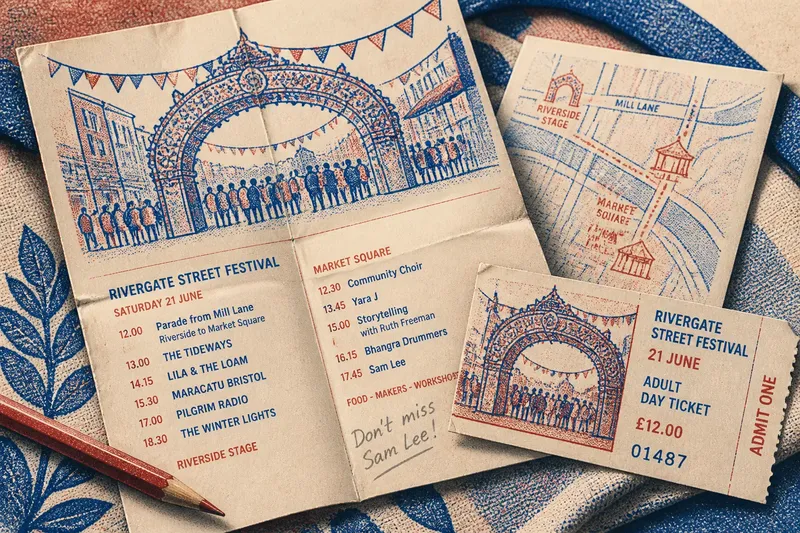
A printed programme can show neighbouring events, times and locations together. That makes it useful when you have not settled on a plan and want to see what else is happening around a performance you already fancy. A folded grid works rather like a table laid with several cards: the options remain visible while you compare them.
This broader view is less useful if the layout is crowded or the type is hard to read. Before relying on print, look for clear groupings by day or venue, legible event names, and a map that connects locations to the listings. If those details are difficult to scan, choose the digital version for browsing instead.
A phone programme is often better for a particular search. If you know a performer’s name, venue or kind of event, search and filters can narrow the options without a tour of every page. If the programme has no useful search, or its categories are unclear, print may be quicker for open-ended browsing.
Phone programmes suit targeted checks and changing plans
A digital programme is useful when you need to find one listing, open venue details or check for a revised schedule. Its advantage depends on the organiser making updates visible and visitors being able to load the information. Look for a clear indication of current details, rather than assuming that any page on a phone is up to date.
Print offers a stable view of the programme as it was issued. If an event moves, the correction may appear on a noticeboard, at an information point or in an announcement instead. That can mean consulting more than one source, so print alone is a less comfortable choice when you expect changes during the visit.
Phone access has its own friction. Messages and other alerts can interrupt a schedule check, and a small screen is awkward to read while walking. Stop somewhere clear before consulting it; the programme can wait a moment, and so can the crowd behind you.
Sharing and access can settle the choice
A printed programme can be passed around or laid open between companions, making it easy to compare options together. A phone may be more convenient if each person wants separate searches or saved listings. Think about how you and your group actually make decisions, not just how you prefer to carry information.
Also consider whether the format is usable for you. Check text size, contrast, screen-reader support and whether the printed map is legible. If one format is difficult to read or operate, use the other where available, and ask the festival organiser about accessible programme options when needed.
Check these details before deciding
- Check the print layout: If event names, times and venues are easy to scan together, choose print for browsing; if they are cramped or separated awkwardly, use the digital listing.
- Check the search tools: If the phone programme can find a performer, venue or event type clearly, use it for targeted searches; if not, browse the printed grid or map.
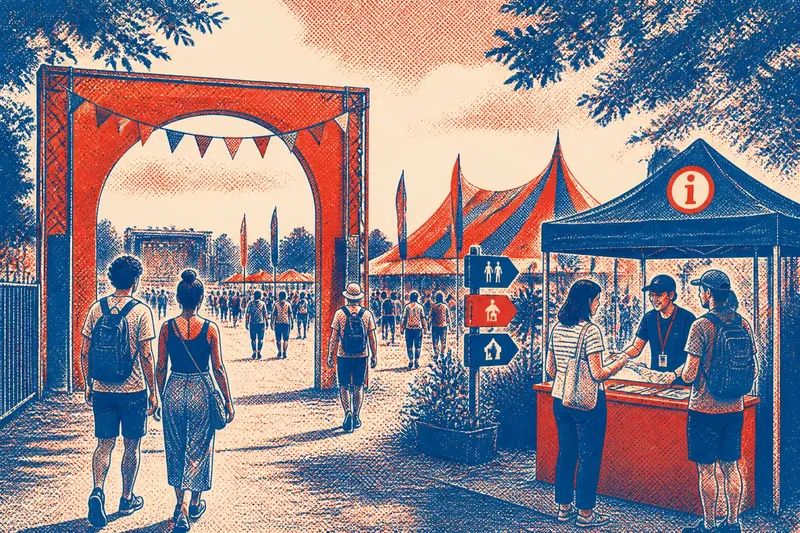
- Check how updates are marked: If the digital programme shows current changes plainly, use it for schedule checks; if changes are hard to identify, confirm details with an organiser or information point.
- Check offline access: If the schedule can be downloaded or opened without a connection, keep it available on your phone; if it cannot, take print or identify an on-site information source.
- Check what your group needs to share: If everyone needs to inspect the same set of listings, choose a readable printed copy; if people are making separate plans, use individual digital listings where possible.
- Check readability and access features: If the screen or print is comfortable to use, choose that format for the visit; if not, try the alternative or ask the organiser about an accessible version.
Which programme format fits your visit?
Can I rely on a phone programme without a connection?
Only if the schedule is available offline or has already been saved in a form your phone can open. Check this before travelling; otherwise, take a printed programme or find out where the festival posts current information.
Is print better for discovering events?
It can be, when the layout makes several events and locations visible together. If the grid is dense or difficult to read, use search and filters on the digital programme instead.
Which format is better for a last-minute venue change?
A digital programme is more useful when the organiser updates it promptly and marks changes clearly. If that is uncertain, check an official noticeboard or ask festival staff rather than relying on an old listing.
Should I carry both formats?
Use both when they serve separate tasks: print for comparing the day and a phone for checking current details. If the programme is settled and one format covers your needs, carrying both adds little.
Choose for the decisions you expect to make
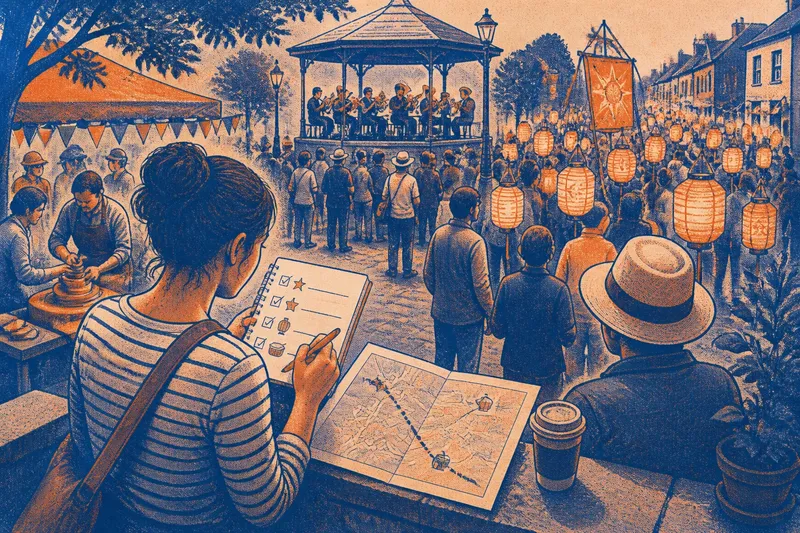
Say you arrive intending to browse an afternoon of performances with a companion. You open the printed programme, compare events listed near the same venue, and choose one that fits the time you have; then you check the organiser’s digital schedule before setting off, because the event is outdoors. If the location has changed, you follow the revised listing; if it has not, the printed plan remains your shared reference.
That is the useful distinction in choosing a printed programme or phone screen: one can make choices visible together, while the other can help locate details and check changes. Before you leave, confirm how the festival communicates updates and whether your chosen format is accessible and available where you will need it.